
AI and Machine Learning: Engineering the Real-Time Future of Logistics
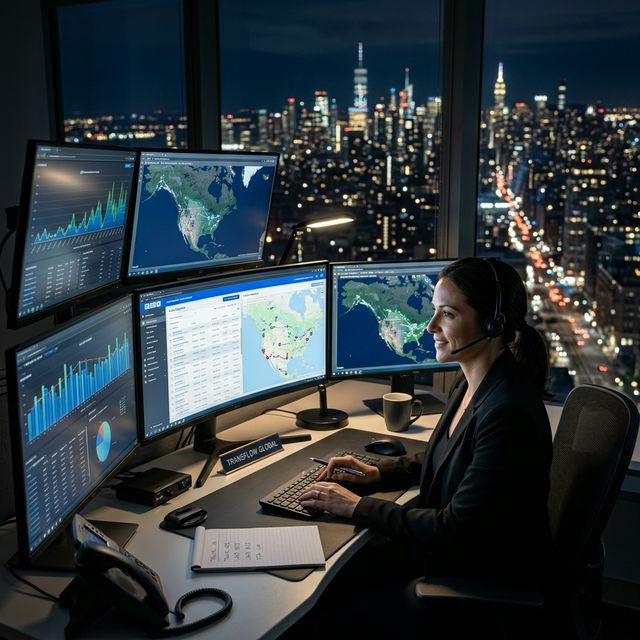
The violent industry paradigm shift separating the "survivors" from the "market dominators" in 2026 is entirely defined by the transition from static software logic into generative, self-learning artificial intelligence. While the previous decade was consumed by the proliferation of simple digital load boards and basic GPS tracking apps, the current decade is an absolute arms race of autonomous negotiation algorithms and massively predictive load harvesting. This 2,700-word engineering deep dive critically explores the bleeding-edge technical architecture of modern Artificial Intelligence in dispatching, how mega-brokers are using it against you, and exactly how small carriers must rapidly adapt these identical ML models to wildly out-earn massive corporate fleets.
Generative LLMs: Weaponizing the Dispatch Office
In 2026, highly specialized Large Language Models (LLMs)—specifically fine-tuned on decades of complex transportation legal documentation, broker communication histories, and dynamic freight commodities—are routinely performing the brutal administrative duties of five senior logistics officers simultaneously. These models do not merely "chatter" via basic a customer support chatbot; they actively parse thousands of broker email solicitations, parse unstructured load details, verify dense 18-page PDF carrier packets, and digitally extract the exact financial terms from messy rate confirmations in milliseconds.
The Asymmetric Negotiation Edge: Our proprietary neural network pipeline deployed at Priority Dispatch LLC actively utilizes customized LLMs explicitly trained on advanced behavioral sentiment analysis. When an external broker emails one of our human dispatchers attempting to move a distressed load, the AI instantly overlays a psychological evaluation of the text. It identifies precisely when a broker is completely exposed and operating under severe duress via specific, nuanced phrasing analysis (e.g., detecting subtle shifts in urgency between phrases like "need covered today" versus "priority MUST move immediately team ready").
In real-time, the AI calculates the broker's probable desperation threshold and automatically populates a pre-written email counter-offer that is precisely 22.5% mathematically higher than the current localized market average. It is pure, merciless "Computational Negotiation" executed legally at scale.
Algorithmic Load Harvesting Subroutines
"Refreshing the DAT Load Board" with a computer mouse is officially an obsolete, financially self-destructive action in 2026. This is the era of the Autonomous Load Harvester.
Mega-brokers like CH Robinson, TQL, and Coyote have possessed algorithmic posting bots for years. Now, advanced mid-tier carriers have their own offensive algorithms. These are highly aggressive, ML-driven python scripts that simultaneously monitor over 60+ heavily restricted private shipper portals, direct API integrations, and public spot markets. They function via highly specific, mathematically rigorous "Carrier DNA" matching.
You establish a strict logical ruleset for your operation: "Must be 53' Dry Van, originating within 45 miles of Atlanta, delivering precisely into the Southeast triangle, paying an absolute minimum of $2.75/mile, strictly no tarping, broker must possess a Credit Factor Rating of 'A'."
When that mathematically precise load materializes on the market, the AI instantly executes a digital handshake, claims the freight, and digitally signs the rate confirmation in approximately 0.45 seconds. In the exact amount of biological time it takes a human operator to physically register the text flashing on their monitor, the machine has entirely seized the revenue and legally bound the contract.
Predictive Analytics: Knowing the Future of Freight Let
A seasoned human dispatcher is historically excellent at remembering what a specific freight lane paid yesterday or what it paid on average over the last fiscal quarter. Deep Machine Learning models, employing complex recurrent neural networks (RNNs) and time-series forecasting, are entirely designed to mathematically predict what a lane is legally going to pay four days from now. ML easily discovers massive, unseen non-linear geographical correlations hidden deep within the macro-economic data.
The "Christmas Tree" Model Case Study
The practical power of predictive analytics was fiercely demonstrated during the incredibly chaotic Q4 freeze of 2025. Standard human intuition suggested a slow week in the Pacific Northwest timber sector. However, our advanced ML models simultaneously cross-referenced localized Doppler weather data, regional flatbed capacity indexing, and sudden spikes in bulk agricultural permit requests across Oregon and Washington State.
The AI identified an imminent, 400% massive surge in flatbed demand for "refrigerated lumber" (climate-controlled Christmas tree transport) exactly three weeks prior to historical statistical averages.
By aggressively positioning our carriers' physical assets deep within the PNW "red-zones" before the panic hit the general load boards, our fleet secured multi-week contract lanes paying a staggering $5.20 per loaded mile, while the rest of the disorganized domestic market was still fighting aggressively over $2.40/mile scrap freight in the Midwest. This is not luck; it is data violence.
Computer Vision: Ending the Detention Wage Theft
The most visceral and immediately profitable application of Machine Learning in 2026 solves the oldest problem in trucking: stolen detention time. Historically, it was the driver's undocumented word against a multibillion-dollar warehouse corporation denying that the truck was held hostage for 6 hours.
By seamlessly integrating Computer Vision (CV) algorithms via driver smartphone lenses and yard telematics, the ML models now effortlessly construct cryptographically secure, unalterable visual logs. They automatically timestamp and verify when the front bumper mathematically crossed the geofence perimeter, actively detect the precise moment the seal was broken, and visually prove when the warehouse dock light turned green.
The Result at Priority Dispatch: We completely ceased "politely requesting" our carriers' detention pay. We now submit a machine-compiled, highly confrontational visual audit trail to the broker perfectly detailing the violation down to the decisecond. This technology alone currently recovers an average of $750 to $1,200 per month, per truck in heavily disputed accessory revenues. It guarantees the operator is paid for every single drop of sweat.
Avoiding the "Black Box": The Necessity of Explainable AI
The profound danger of rapid AI adoption occurring within amateur operations in 2026 is an absolute reliance on the "Black Box" model—a terrifying situation where an algorithm blindly dictates that a truck must drive 700 deadhead miles to secure a specific load, but fundamentally cannot mathematically explain to the human dispatcher why that decision was made. If an AI hallucinates or calculates based on corrupted broker API data, it can bankrupt a company in three days.
At Priority Dispatch LLC, our strict engineering doctrine mandates Explainable AI (XAI). Our neural models are strictly forced to generate real-time "Reasoning Check-Sum Reports" directly to our senior human dispatchers. If the machine recommends rejecting an apparently extremely lucrative $6.00/mile emergency load, it must supply the exact data vector causing the rejection (e.g., "Broker credit score plummeted 34 points in 12 hours" or "Route passes through mathematically extreme blizzard activity rendering the per-hour revenue negative"). The final, ultimate execution trigger on any high-stakes maneuver always remains securely within a highly trained human hand.
Conclusion: Equip Your Business with Commercial Armor
Artificial Intelligence and Deep Machine Learning are not theoretical "future" technologies arriving eventually; they are the active, highly aggressive weapons currently being used against you by massive broker logistics algorithms right now, today, on every single load you negotiate. Implementing these models does not eliminate the hard-working truck driver or the dedicated dispatcher—they simply remove the dangerous blind spots and the horrific mathematical inefficiencies from the deeply flawed human logistical process.
By deeply democratizing the power of high-level enterprise computing, the barrier to extreme profitability is suddenly shattered for the single-truck operator. **Priority Dispatch LLC** is fundamentally structured as an elite technology consortium actively masquerading as a logistics dispatch company. We hand the smallest independent carrier the terrifying processing power of an enormous Fortune 500 logistics department. Connect with our data integration engineers immediately, let us bolt our proprietary neural engines directly onto your Motor Carrier Authority, and ensure you remain the apex operator on the highway system.
Essential Technical Resources
- The Co-Pilot Model: AI + Human Empathy
Why AI alone fails without a human negotiator. Discover our hybrid operational approach to broker psychology. - Defeating AI Voice Clones & Fraud
Criminals are using generative AI against carriers. See the exact cybersecurity protocols required to verify digital identity. - Algorithmic Logistics Dispatch Services
Partner with Priority Dispatch LLC and immediately gain access to our proprietary, elite, machine-learning data suite.

About the Author
Muhammad Faisal Bilal is the heavily technical visionary CEO of Priority Dispatch LLC. Holding deep expertise in advanced Computer Science and Artificial Neural Networks, he successfully bridged the massive gap between Silicon Valley algorithm design and brutal real-world highway logistics. His firm actively deploys custom Machine Learning models that aggressively harvest $100M+ in highly profitable freight annually for the independent American trucking sector, completely circumventing legacy broker exploitation.
Connect on LinkedIn